
The Land We Tend

A Lesson That Sparked a Lifelong Passion
Long before sustainability became a mainstream movement, my visionary sixth-grade teacher introduced our class to the foundational principles of recycling. It was the 1960s, and the San Francisco Bay Area was leading the charge in innovative, community-driven efforts that would eventually shape national environmental policies. Her enthusiasm for stewardship and forward-thinking approach opened my eyes to the delicate balance of nature—and the responsibility we each hold in preserving it. That early influence ignited a lifelong commitment to sustainability, guiding both my personal choices and the eco-conscious philosophy behind my facial spa.
Years later, after relocating to Metro Atlanta, I turned my passion into action. I initiated a monthly neighborhood recycling pickup to support the Firefighters’ Aluminum Cans for Burned Children initiative. My involvement grew, and I became a contributing member of the City of Decatur’s early recycling task force, earning recognition as a “Superstar” for my efforts.
Recycling has always been a priority for me, and witnessing the unique approaches of different communities is inspiring. In Japan, for instance, recycling is deeply ingrained in daily life, with neighborhoods following meticulous collection schedules for specific materials. While we don’t yet have that level of structured convenience here, we do have outstanding alternatives. Sustainability is a journey we take together, with small, everyday actions making a meaningful impact.
One way to make a difference is through CHaRM (Center for Hard to Recycle Materials), a local nonprofit dedicated to keeping hazardous waste and hard-to-recycle items out of landfills and waterways. CHaRM simplifies the recycling process, offering an easy way to dispose of items that might otherwise contribute to environmental harm—from electronics and household goods to hazardous materials and everyday recyclables. With locations in Atlanta and Decatur, it provides a practical, accessible solution for those eager to make a lasting impact.
Taking small steps toward sustainability can be empowering. Whether it’s visiting CHaRM yourself or encouraging friends and family to recycle more, every effort adds up. Together, we can make mindful choices that protect our planet for future generations.

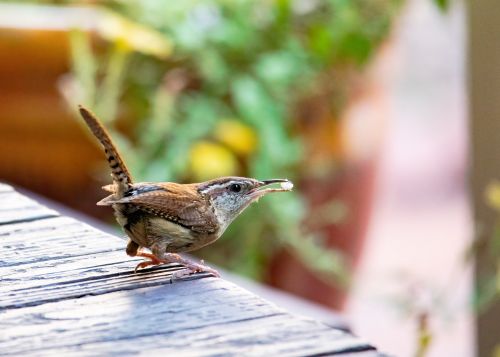
Backyard Birdwatching:
A Daily Ritual of Renewal and Presence
With so much of life happening in front of screens and packed schedules, I’ve found myself craving more time to simply notice what’s around me. Birdwatching in my garden has turned into one of the most peaceful parts of my day—not to identify every bird or keep a checklist, but to just observe. The rustle of wings, a quick dash of color, or the rise of a morning melody helps me slow down and settle in.
It’s surprising how much calm comes from those small moments. They draw me out of my own head and connect me with something steady and natural. No special gear, no set plan—just quiet minutes to look, listen, and be present. Beauty and balance often live in the simplest places, right outside the door. Familiar birds bring a kind of warmth I didn’t expect. There’s comfort in spotting the same cardinal on the fence or hearing sparrows’ soft chatter at the window. It reminds me I’m part of something continuous and alive. And sometimes it’s their personalities—playful, curious, determined—that shift my mood. These gentle interactions don’t just entertain; they nurture emotional balance, often setting the tone for how I move through the day. In fact, birdwatching has become a form of gentle recovery. A few minutes outside—with no phone, no expectations—steadies my breath and quiets my thoughts. Nature asks nothing but offers so much. That subtle reset helps me feel less reactive, more grounded. For me, it’s one of the easiest ways to manage stress.
Of all the birds I’ve watched, the Carolina Wren stands out. These little creatures are full of charm and purpose. One of the most endearing habits? The males build multiple nests, using bits of moss, twigs, and paper scraps and let the female choose the one she wants to raise her young. There’s something touching about that—an instinct to prepare several safe options and let her decide. I’ve seen these wrens nest in planters, porch corners, even coiled garden hoses. They’re resourceful, creative, and committed. Mating for life they stay close to home, often heard before they’re seen, their bold songs echoing through quiet mornings.
Their nesting, singing, and gentle routines mirror what I aim to cultivate in my own life: beauty built from everyday materials, care shown through presence, and small acts that create comfort and continuity. Birdwatching wasn’t something I planned; it simply unfolded and became a steady source of renewal. For anyone feeling overstimulated or stretched thin, I’d suggest just start by noticing. Nature doesn’t rush, compete, or demand—it simply welcomes us in. And sometimes, all it takes is stepping outside, noticing who flies by, and letting that be enough.

The Living Landscape of La Piccola Villa
A Sanctuary Shaped by Water, Wildlife, and Time
At the top of Carlene Way in Lilburn’s "Rivercliff Community", La Piccola Villa rests like a quiet breath—a sanctuary where trees embrace the land and the gentle rhythm of Georgia’s Piedmont hills sets the pace of daily life. My Vibrant-Glow Facial Spa is nestled within this wooded slope, offering more than restorative treatments—it offers a moment to feel connected to nature’s hush.Though recent clearing has opened parts of the neighborhood, the canopy still shelters much of the property. The terrain holds its enduring majesty, with contours that rise and fall like a slow heartbeat—echoing the grounding presence of the surrounding hills. Down below, where the road meets the neighborhood’s tennis courts and pool, the Yellow River curves in a gentle bend. In this hidden pocket of the landscape, beavers have been seen building small dams and forming secret ponds just beyond everyday view.
The Yellow River: A Wildlife Highway
The Yellow River stretches 76 miles from north of Lawrenceville to Jackson Lake, winding through Gwinnett, DeKalb, Rockdale, and Newton counties. In the Rivercliff Community, it flows through an especially scenic stretch between US-78 and Snellville Highway, where shoals and flatwater invite kayaking, tubing, and quiet observation.
Beyond recreation, the river plays a deeper role. It serves as a wildlife highway, a source of water and shelter, and a thread that ties together the natural and human communities of the region. Its riparian zones are rich with life: cardinals, warblers, and woodpeckers nest in the trees; raccoons, foxes, and deer move along the banks; turtles bask on sunlit logs; herons and egrets wade in the shallows; and frogs sing from the underbrush.
Otters on the Move: From River to Pond
From the winding Yellow River below Carlene Way, river otters set out on quiet journeys—slipping through creeks, ditches, and hidden drainages like furry explorers on a mission. These agile travelers know every shortcut, following natural corridors that connect the river to nearby ponds, especially those stocked with bass.
One such pond lies just two houses down from La Piccola Villa—a large, enhanced natural pond tucked between Dean Road and Carlene Way. At dawn and dusk, splashing and swimming shapes have been spotted there, offering subtle signs of otters at play. With noses like fish-finding compasses, they sniff out upstream ponds teeming with dinner. They hop over logs, scramble up muddy banks, and even slide across damp grass when the stream runs dry. Whether swimming, bounding, or belly-sliding, otters adapt to every twist in the terrain. Their short, strong legs and webbed feet make them masters of shallow streambeds, turning even the smallest trickle into a highway of possibility.
The Brook Behind the Sanctuary
Just beyond the backyard at La Piccola Villa, the land slopes gently toward a small brook that winds through the understory. During rainfall, the brook swells and follows the natural contours of the terrain—first feeding the large pond where otters have been seen fishing, then continuing its quiet journey downhill until it joins the Yellow River. This gradual shift from upland to lowland reveals how the landscape moves with the weather—an unseen corridor that may well be part of the otters’ daily route.
Though the river lies mostly hidden from view, its presence is unmistakable—in the rustle of leaves, the movement of deer and otters, and the subtle tilt of the terrain. This place is shaped by the rhythms of water, wildlife, and time. It offers a quiet continuity, holding space for both stillness and change—a sanctuary where the land itself invites renewal.
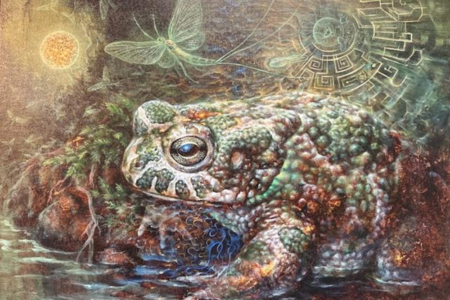
“At the Origins”
— Artwork by Tatiana Kiselyova (2017)
Where Earth Sleeps and Magic Waits
At La Piccola Villa, I’m fortunate to share the land with an astonishing number of garden toads — quiet, steady companions who appear at dusk as naturally as the evening breeze. All summer long, I watch them emerge from their cool daytime hideaways, hopping confidently across the pathways as if they know this sanctuary belongs to them as much as it does to me. When the streetlights glow, several of them gather beneath the warm pools of light, perfectly still, waiting for moths and beetles to drift down. It’s a small ritual I never tire of witnessing — the soft pulse of life moving through the dark.
Now that winter has settled in, these familiar little beings are safely tucked into their toad hollows, resting deep beneath the leaf litter and roots until the warmth returns. They dig backward into the earth with their strong hind legs, carving out small chambers that hold just enough insulation to protect them from the cold. And nature has equipped them beautifully for this season of stillness: their bodies can slow to a gentle, quiet rhythm, and they produce natural compounds that act like tiny antifreeze molecules, preventing their vital organs from freezing even when the soil around them grows icy. It’s one of the quiet miracles of the natural world — a reminder that resilience often hides beneath the surface.
And yet, beyond their usefulness and their gentle habits, toads carry a deeper story. In the quiet of the night, a toad sits at the edge of the pond. To most, it is plain — mud‑brown, still, unremarkable. But those who look closer see its magic. Born a tadpole, it has already lived one life and transformed into another, carrying the mystery of change within its skin. Ancient peoples saw this and whispered: the toad is a symbol of rebirth, of hidden wisdom, of wealth that hops unexpectedly into our lives. They became guardians of thresholds — creatures that dwell between water and land, shadow and light.
Here at La Piccola Villa, surrounded by woods and the soft murmur of the Yellow River, that symbolism feels especially alive. The toads who live here are more than garden helpers; they are small keepers of the land’s secrets, reminders that magic often hides in the ordinary. Watching them move through the seasons — from summer hunters beneath the streetlamps to winter dreamers in their hollows — is one of the quiet joys of living in this sanctuary.
As winter continues its quiet work, I’m reminded that so much of life happens beneath the surface — in the soil, in the heart, in the places we rarely see but always feel. The toads resting in their hollows, the roots holding steady in the cold, the hush that settles over the land… all of it invites us to slow down and trust the unseen rhythms that carry us forward. May this season offer you the same sense of protection and quiet renewal that the earth offers its smallest creatures, and may you find your own warm hollow of rest until the light returns.

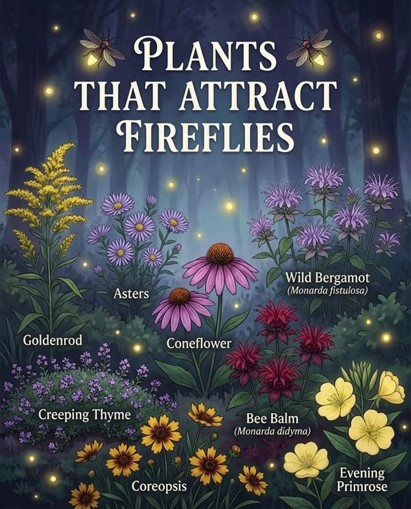
My Glow Garden
There is a moment each spring when the evenings begin to soften — when the air warms just enough to feel like a promise, and the first hints of summer shimmer at the edges of dusk. This is when My Glow Garden begins to stir. By late April, tiny lanterns start rising from the grasses, each firefly (Lampyridae) offering a brief, magical pulse of light. Sitting outside in the gentle warmth, I watch their slow, floating sparks drift through the darkening yard, and I’m reminded how little we truly know about these luminous beings. Why do they flash; what are they trying to convey? Their light feels like a secret language, a quiet conversation happening just above the earth — and that curiosity opened a door into a world far richer than I expected.
What I’ve learned is that fireflies are full of surprises. They are not delicate sprites at all, but beetles — found on almost every continent — who spend most of their lives hidden as larvae beneath leaf litter and damp soil, glowing faintly like tiny embers tucked into the earth. Their flashes are purposeful: each species has its own rhythm, a coded signal used to find a mate. Their glow also warns predators that they are not a tasty snack. Yet even with all their brilliance, fireflies are disappearing. Habitat loss, pesticides, and the increasing brightness of our nights are dimming their numbers, making those first spring flashes even more precious.
Before their lanterns rise into the warm spring air, their story begins in the quiet world held within the soil.
A Life Shaped by Soil and Shadow
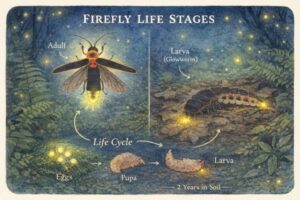
Fireflies pass through four stages — egg, larva, pupa, adult — with most of their life spent glowing softly underground. Protecting this hidden habitat keeps their summer lights alive.
Firefly Life Cycle Chart
Egg — Laid in moist soil or leaf litter in late spring or early summer.
Larva (1–2 years) — Lives beneath leaf litter and moss, glowing faintly as it hunts.
Pupa (1–3 weeks) — A quiet transformation chamber beneath the soil.
Adult (3–6 weeks) — The glowing stage we see from late April through July.
And knowing how much of their life unfolds in that hidden world beneath our feet makes it even clearer how much they depend on us. My Glow Garden — and gardens like it — can help. Fireflies thrive where nature is allowed a bit of softness and wildness. Low‑hanging branches, long grasses, and a scatter of forest litter create the perfect nursery for their larvae. Moisture is essential, so a small water feature or naturally damp corner becomes a haven. Darkness matters too; leaving this space unlit at night lets their tiny lanterns shine without competition. Native plants such as coneflower, asters, goldenrod, bee balm, and evening primrose offer nectar for adults and safe places to mate and lay eggs. And keeping the area pesticide‑free protects the young for the full one to two years they grow beneath the soil. With just a few gentle choices, we can keep their lanterns drifting from late April through July, turning our spring and summer nights into seasons of quiet magic and wonder. And in those tender moments of light, our gardens remind us that even the smallest choices can bring brightness back into the world.

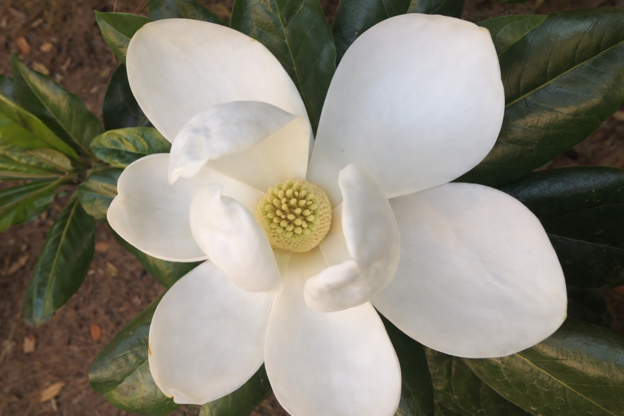
Magnolia: A Love That Took Root
This season, we’re reflecting on the love that grows in the soil of La Piccola Villa and shows itself in the living things that remain.
The magnolia standing at the front of La Piccola Villa is more than a tree — it is a living vow. Planted on the wedding day of the couple who built this home, it has grown for decades into a 75‑foot guardian of the property, carrying their devotion upward through every branch. To stand beneath this tree is to feel the quiet endurance of something that began with two people and now shelters an entire landscape.
Magnolias evolved roughly 95 million years ago — even before the age of dinosaurs — forming an ancient partnership with primitive beetles such as click beetles, sap beetles, scarab beetles, soldier beetles, and blister beetles. Their flowers reflect that history: thick, leathery petals built to withstand strong mandibles; large, muted blossoms shaped for beetles that rely more on scent than sight; and an intoxicating fragrance that mimics ripe or fermenting fruit. That biology remains today — beetles are still the magnolia’s primary pollinators, even though butterflies and moths may occasionally visit. The tree’s sturdy structure continues to support a living community around La Piccola Villa: beetles, bees, and hoverflies feed on its pollen; birds and small mammals rely on its bright red seeds; and the dense canopy offers shade and shelter for toads, skinks, and songbirds. Even humans have long used magnolia bark and flowers for nourishment and healing. Every part of the tree participates in the ecosystem — a quiet generosity that mirrors the spirit of the sanctuary I've cultivated.
Across cultures, magnolias symbolize steadfast love — not the fragile kind, but the kind that deepens, strengthens, and becomes a place of belonging. Their blooms open with a slow, deliberate grace, never rushing, never competing, simply offering beauty when the season is right. Our bodies reflect what’s happening in the environment too, attuning to the natural rhythms that guide every living thing here. And in the presence of this ancient tree — planted in devotion, thriving in community — the surroundings settle into their own steady cadence, sunlight moving through glossy green leaves.
And as the warm months unfold, the calm at La Piccola Villa is carried by the stories that have long been part of this land.